Bringing Heritage Projects to Life: How an Agile Planning Canvas Can Help You Turn Ideas into Action
Heritage projects often begin with a powerful idea.
A story that needs to be told. A building that needs to be restored. A collection that needs to be shared. A community history that deserves to be preserved.
The passion and purpose behind these projects are what make them so valuable.
But turning that vision into reality can be challenging.
Heritage projects often involve complex partnerships, limited resources, changing requirements, funding constraints and many different voices to consider.
A good plan is essential.
But in a world where circumstances can change quickly, the best plans are not fixed documents. They are tools that help you navigate uncertainty.
This is where an Agile Planning Canvas can help.
The challenge of planning heritage projects
Heritage projects are often unique.
Unlike a straightforward project where the outcome and process are predictable, heritage work frequently involves discovery and adaptation.
You may uncover unexpected information during research.
A conservation project may reveal new challenges.
Community engagement may change your understanding of what matters most.
Funding opportunities or restrictions may affect your priorities.
Stakeholders may have different expectations about what success looks like.
Traditional project plans can struggle when they assume everything is known from the beginning.
Agile planning recognises that learning is part of the process.
What is an Agile Planning Canvas?
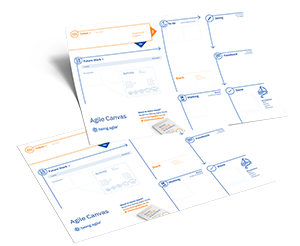
An Agile Planning Canvas is a simple visual tool that helps you bring together the key information needed to move a project forward.
Instead of creating a long document that sits on a shelf, the canvas provides a shared view of your project.
It helps teams ask important questions:
Why are we doing this project?
What is the purpose? What difference will it make? Why does this matter?
Starting with purpose keeps everyone aligned when decisions need to be made.
Who are we creating this for?
Heritage projects often serve multiple audiences, from local communities and visitors to researchers, funders and future generations.
Understanding who you are trying to reach helps shape better decisions.
What does success look like?
Success may not simply be completing a project on time and within budget.
It could mean increased engagement, stronger community connections, improved access, preservation of important heritage or sharing stories that have previously been overlooked.
What needs to happen next?
Large projects can become overwhelming.
Breaking work into smaller steps helps teams focus on progress and build momentum.
Moving from fixed plans to adaptive planning
Agile planning does not mean abandoning structure.
It means creating enough structure to move forward while staying open to learning and change.
A good Agile plan provides direction without creating unnecessary rigidity.
It allows teams to regularly ask:
What have we learned?
What has changed?
What do we need to prioritise now?
What should we do differently?
These questions help heritage teams make better decisions throughout the life of a project.
Collaboration is at the heart of heritage projects
One of the biggest benefits of a visual planning canvas is that it creates a shared understanding.
Heritage projects often bring together people with different expertise and perspectives.
Curators, conservation specialists, volunteers, community groups, funders, designers and project teams may all view the project differently.
A canvas gives everyone a place to contribute, challenge assumptions and understand the bigger picture.
Better conversations lead to better collaboration.
Small steps create progress
Many heritage projects are ambitious.
They involve years of planning, significant investment and multiple stages of delivery.
When projects feel complex, it can be easy to become stuck.
An Agile approach encourages teams to focus on the next valuable step.
What is the most important thing we can learn?
What decision needs to be made?
What small action will help us move forward?
Progress does not always come from having every answer.
Sometimes it comes from taking the next step and learning along the way.
Download your free Heritage Project Planning Canvas
The Heritage Project Planning Canvas is designed to help heritage organisations, project teams and community groups turn ideas into clear, actionable plans.
Use it to:
✓ Define your project purpose and outcomes
✓ Prioritise activities and next steps
✓ Highlight challenges and dependencies
✓ Collaborate clearly with stakeholders
✓ Adapt your plan as your project develops
Heritage is about preserving the past while creating meaning for the future.
Your projects deserve a planning approach that respects that complexity.
A perfect plan does not exist.
But a clear purpose, shared understanding and willingness to adapt can help you bring important heritage projects to life.
Get started and download your free Agile Project Planning Canvas
Free Project Planner